A few drawings to keep my eye and hand in:
Coloured pencil, pastel, charcoal, pencil, watercolour


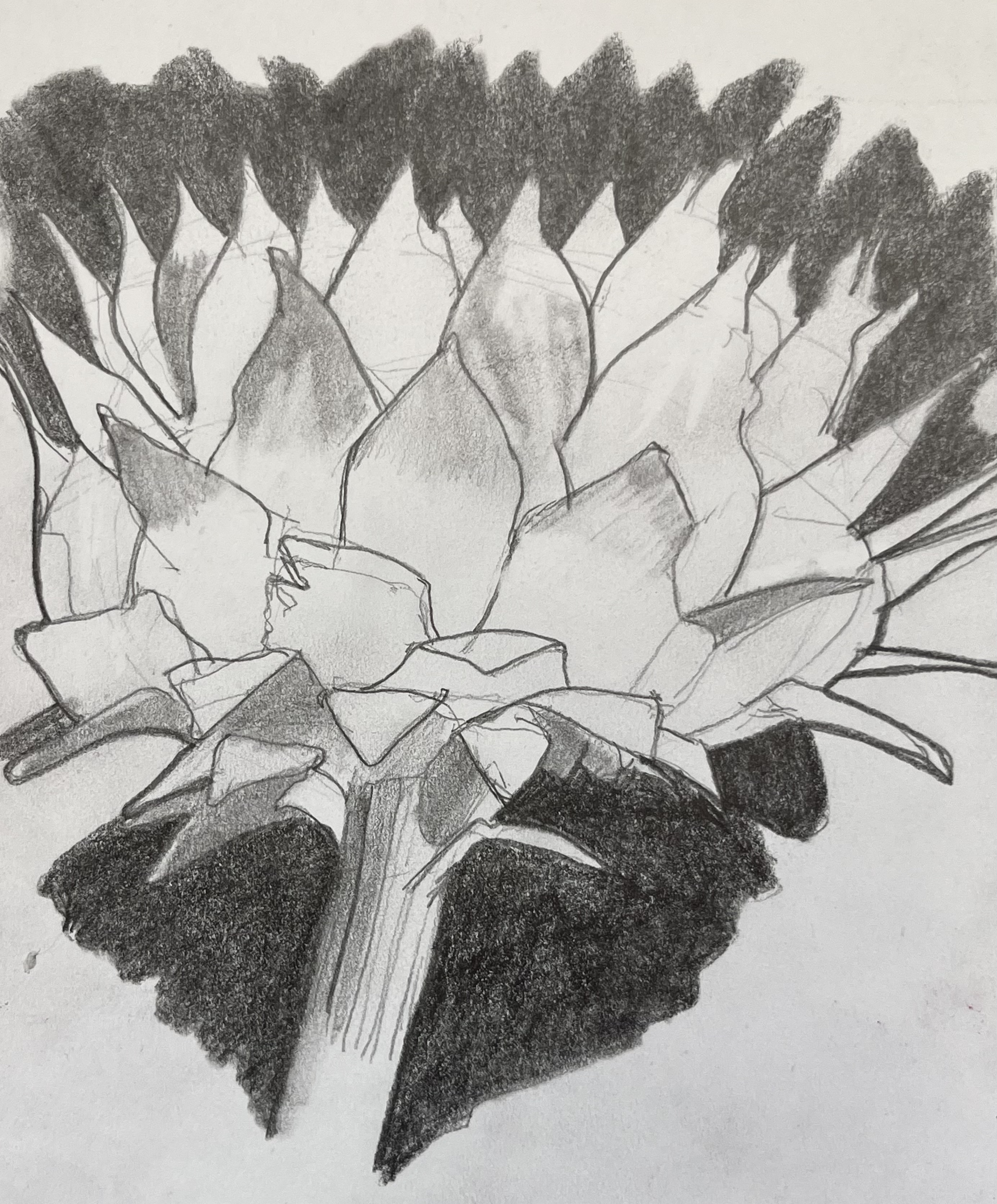

A few drawings to keep my eye and hand in:
Coloured pencil, pastel, charcoal, pencil, watercolour
Back on the iPad here are some experiments playing with the Procreate App


My starting point was a photograph of a moody and decorative collage made on a dark winter's day out of cut and torn fragments from another piece along with crystalline watercolour to bring out the forms. Multiplying, transforming and layering the image I made variations on my iPad. The original collage is the first image followed by three of my favourites from the sequence.


Next in the series of small circular paintings of the five wisdom dakinis. Ratnadakini is accompanied by Ratnasambhava's horses (they support his lotus throne) and dragons. For me dragons are wisdom beings akin to Nagas and also symbolise the freeing of the subtle energies of the body.

More ideas for ways to make an image of the Magic City of the White Lotus Sutra.
My current exploration across all themes is the interplay between spontaneity and planning. Improvisation versus structure. Making a surface combining different kinds of wet and dry media on paper.
In today's doodle I play with light and dark using tinted charcoal and gold pen, thinking about pyramids, the sun and moon and a stairway to heaven.

And this is an earlier mixed media sketch (pastels, water, marker pen) - there surely are gardens and music in the magic city. .

A few studies from my sketchbook using oil pastels and watercolour aiming to express a sense of the element of Air symbolised by a green crescent bowl. The pastel sketch of the stupa is here to give the image context of the green crescent of air.


A theme I return to from time to time - here are two sketches.
Going for a combination of stillness and dynamism.


This painting is inspired by Wallace Steven’s “Of Mere Being” and reflects my response to Steven’s evocation of the space of the mind beyond reason and thought. The poem has a number of visual images: a golden bird on a palm, bronze decor, fire fangled plumage, and the mysterious spaces in the mind beyond the last thought. I've juxtaposed a literal figurative image with abstract forms. It is a difficult painting to photograph:the actual painting is more subtle and luminous.

This new circular painting of Peaceful Vajrapani explores stillness and movement. The figure is an embodiment of energy. For me wrathful Vajrapani correlates with Piti (rapture) in meditation: his energy bursting out and full of movement, and peaceful Vajrapani correlates with Sukha,(bliss) a fuller, more intense and more contained form of the energy symbolised by the figure. This painting is currently on display at the North London Buddhist Centre in an exhibition on the ground floor. The exhibition runs for a month.
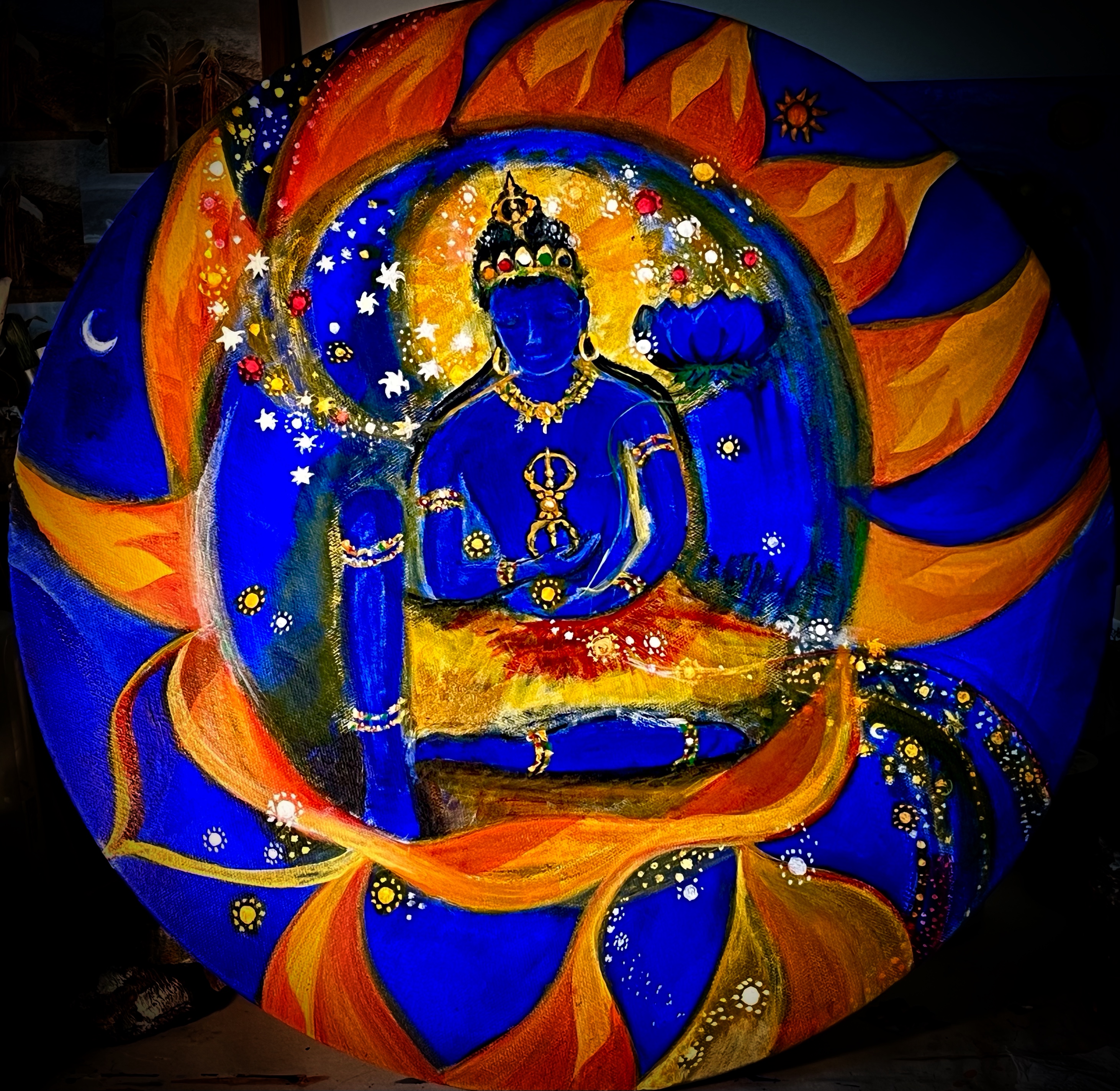
28 years ago (1996) I made a life size painting of him after a vision in meditation the previous year where he came forward out of a visualised array of figures on a refuge tree, shining out like a blue sapphire, vivid and luminous and brighter than the other figures. This early version was painted during a stay in St Ives, Cornwall. The bright rainbow light reflecting off the sea found its way into the painting. The way I painted the figure and composed the piece owed a lot to the formal influences of Matisse and Patrick Heron.

Five years later (2001) I made another version of Peaceful Vajrapani where I was playing with the pictorial space in a different way, exploring the spatial paradox of painting a dark blue figure where, because the dark blue melts back into deep space the figure may not be immediately apparent. I was interested in the connection between pictorial space and the inner space of the mind. And I used a few pictorial devices to create the spatial effects in that version.


